
You’ve told your child to be honest. You’ve explained why it matters, and you’ve said it again at dinner, a little louder. Two days later there’s a brand-new fib about the homework.
Most of us reach for a talk when we want a value to land, and kids often tune it out. Storytelling for teaching values to kids works differently, because a child watches a choice play out instead of being handed a rule. Here’s what research says about that, how Indian storytelling traditions got there centuries ago, and a simple way to try it at home or in class.
Why a lecture slides off and a story sticks
Try explaining “integrity” to a six-year-old. The word means nothing yet. A paper in Psikologika, a journal from Universitas Islam Indonesia, makes the same point: morals are abstract ideas, and young children tend to think in concrete terms.
A story closes that gap. Instead of the word “honesty,” the child gets a boy, a broken vase and a decision. They can picture it, guess what happens next, and judge the character without feeling judged themselves. A lecture is aimed at the child. A story is about someone else, so there’s nothing to defend.
Does storytelling beat lecturing? What the research shows
The best-known test comes from psychologists at the University of Toronto and McGill University. Their study, published in Psychological Science in 2014, involved 268 children aged 3 to 7. Each child played a toy-guessing game, was left alone with a toy they could easily peek at, then heard one of four stories before being asked if they’d looked. Most had.
The four stories were The Tortoise and the Hare (the control, which has nothing to do with lying), Pinocchio, The Boy Who Cried Wolf, and George Washington and the Cherry Tree.
Only the last one made a difference. Children who heard about young George owning up to chopping down his father’s cherry tree, and being praised for it, were about three times more likely to tell the truth than children who heard the control story, according to McGill’s account of the study. Pinocchio and The Boy Who Cried Wolf, where lying ends badly, failed to reduce lying at all, per the paper’s abstract.
The researchers then rewrote George’s ending so he lied and got punished, and the benefit disappeared. Lead researcher Kang Lee’s conclusion, as McGill reports it, was that stressing the rewards of honesty works better than stressing the cost of lying.
A fair warning: it’s one study, one value, and children in a lab. The authors themselves say more research is needed to learn whether moral stories change behaviour over the long term. Still, it’s a useful nudge. Plenty of the moral stories for children we grew up with are cautionary tales, and cautionary tales may not be doing what we assume.
How Indian tradition teaches values through stories
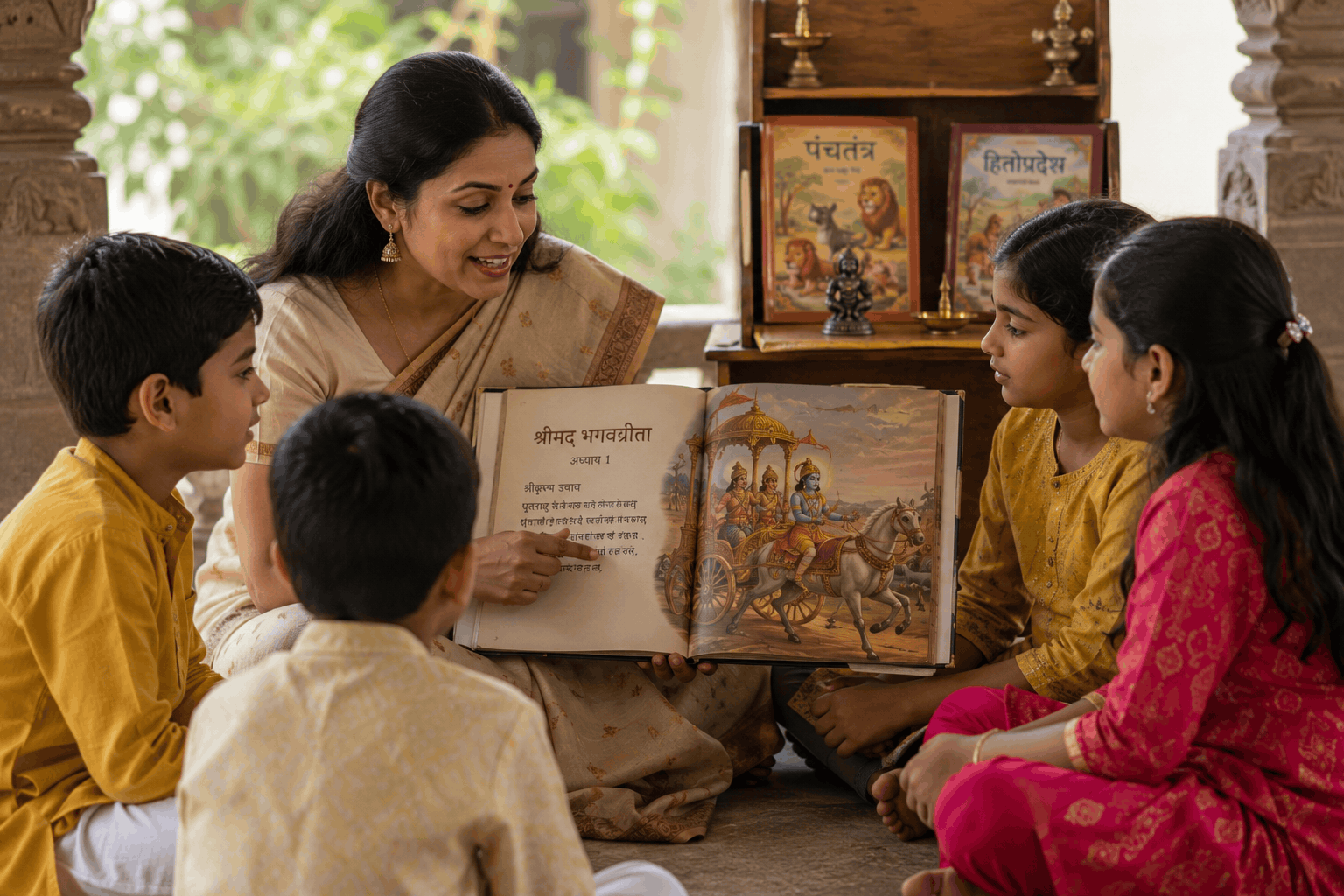
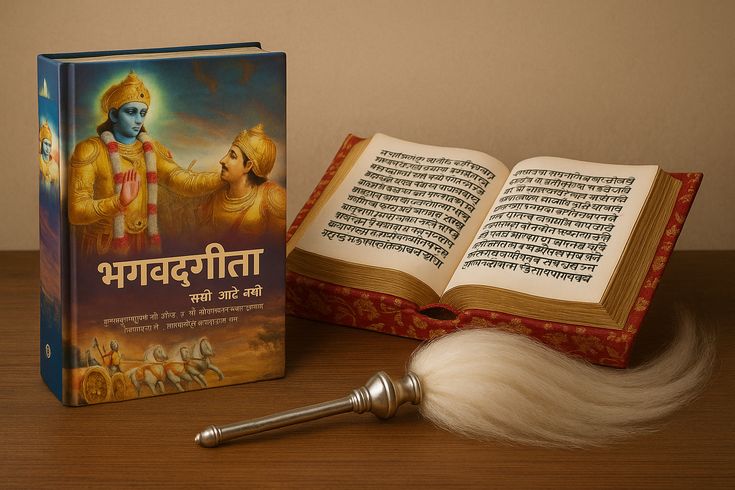
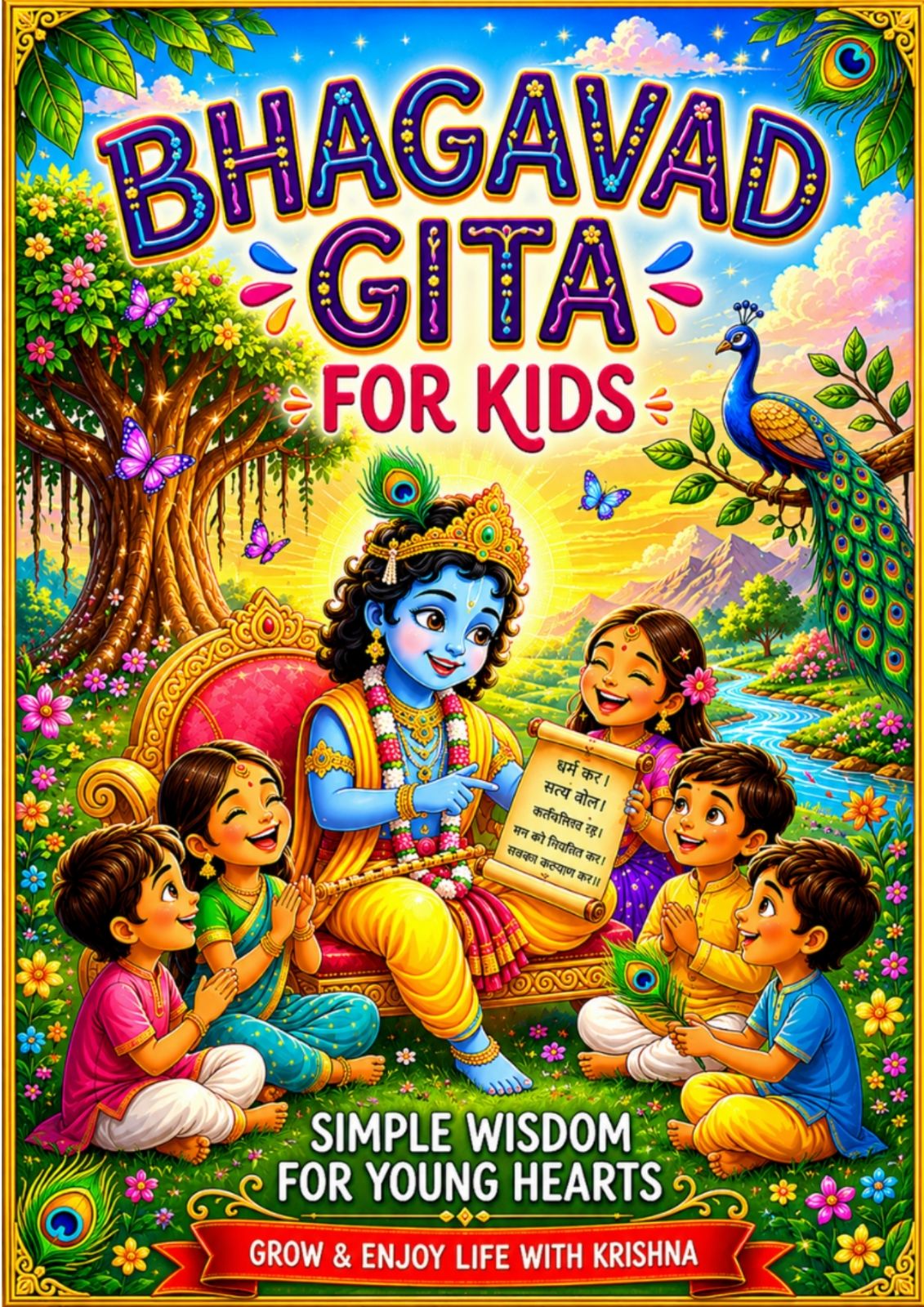
Storytelling for teaching values to kids is nothing new in Indian classrooms. By tradition, the Panchatantra used animal fables to teach princes how a wise person conducts themselves, according to the Odisha government’s Orissa Review. The Bhagavad Gita shares the instinct. Per IIT Kanpur’s Gita Supersite, its roughly 700 verses sit inside the Mahabharata’s Bhishma Parva and open with Arjuna looking across the battlefield at his own relatives and teachers, unable to act. Krishna’s teaching arrives because Arjuna is stuck in a real dilemma, not because someone decided it was time for a talk. Our Bhagavad Gita book for kids is one way to bring that story to a child.
Education World’s reading of the 2023 National Curriculum Framework for School Education says the framework recommends original Panchatantra, Jataka and Hitopadesha stories, plus tales of great Indian heroes, for introducing core values to children at the foundational stage.
Story-based learning for values: how to practise it at home
Schools call it story based learning, and it fits into the wider value education work we cover on our blog. At home it can be five minutes in the car. This method keeps the story in charge:
Teachers can run the same loop in a classroom: tell, ask, then let a few children retell it in their own words. School teams in Gurugram and Delhi NCR can see how we bring values into classrooms on our programs page.
Which moral stories for children are worth telling?
Not every classic earns its place. A quick filter:
- Does the character make a clear choice your child can follow?
- Does the good choice lead somewhere good, rather than just away from trouble?
- Could your child retell it in two sentences?
- Is the setting familiar enough that they see themselves in it?
On that last point, the framework recommends choosing stories from the Indian and local context as much as possible, per Education World. Vikaspedia’s summary of the framework puts the foundational stage at ages 3 to 8. For those years, keep it to one choice and one consequence. Older children can handle dilemmas where both options cost something, which is exactly Arjuna’s position.
Try one story tonight
Storytelling for teaching values to kids doesn’t require a library full of books or a talent for dramatic voices. It starts with one value, one meaningful story and one open question.
Tonight, choose a value your child has been learning about, tell a story that brings it to life, and ask what they would have done in the character’s place. Give them time to think and listen without rushing to correct their answer.
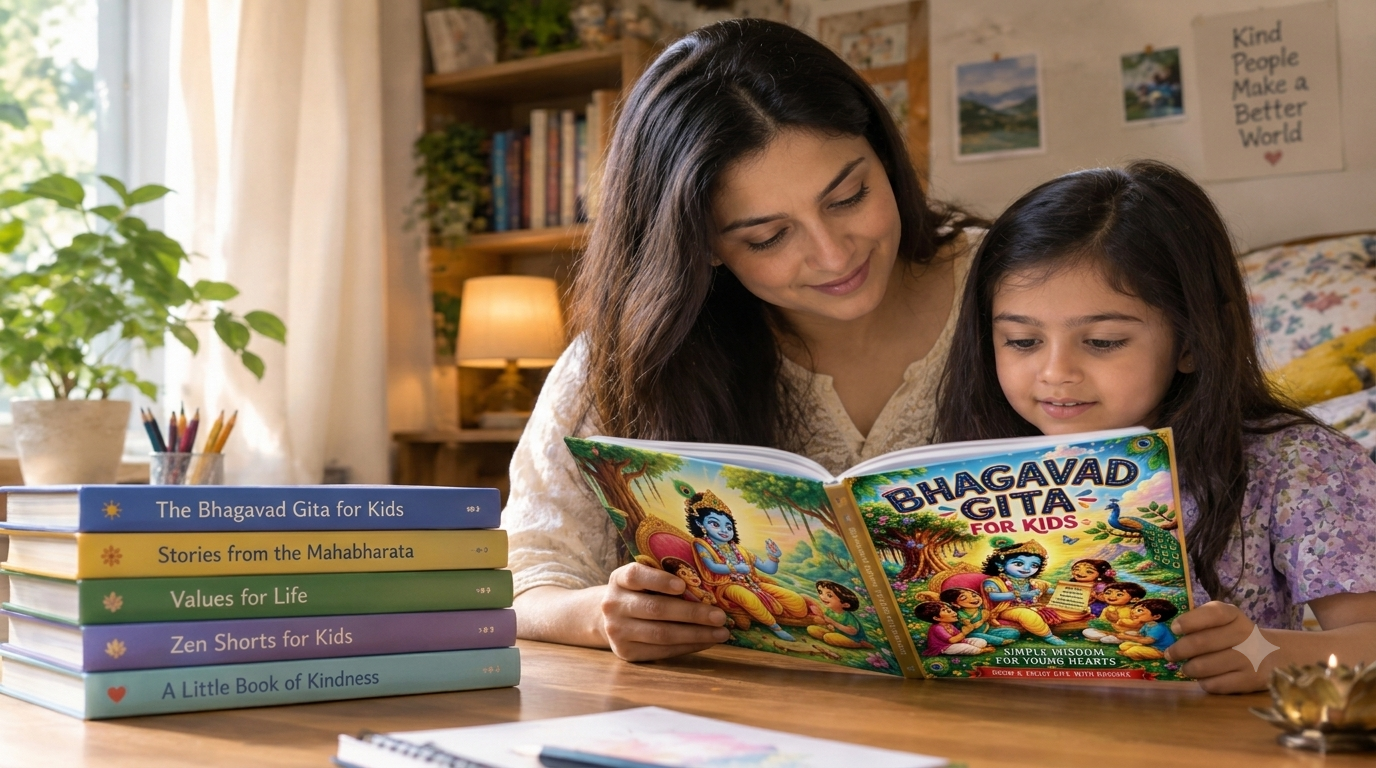
Looking for more ways to introduce timeless values to young minds? Explore our Bhagavad Gita for Kids and discover stories that can encourage meaningful conversations about life, choices and character.
















0 Comments