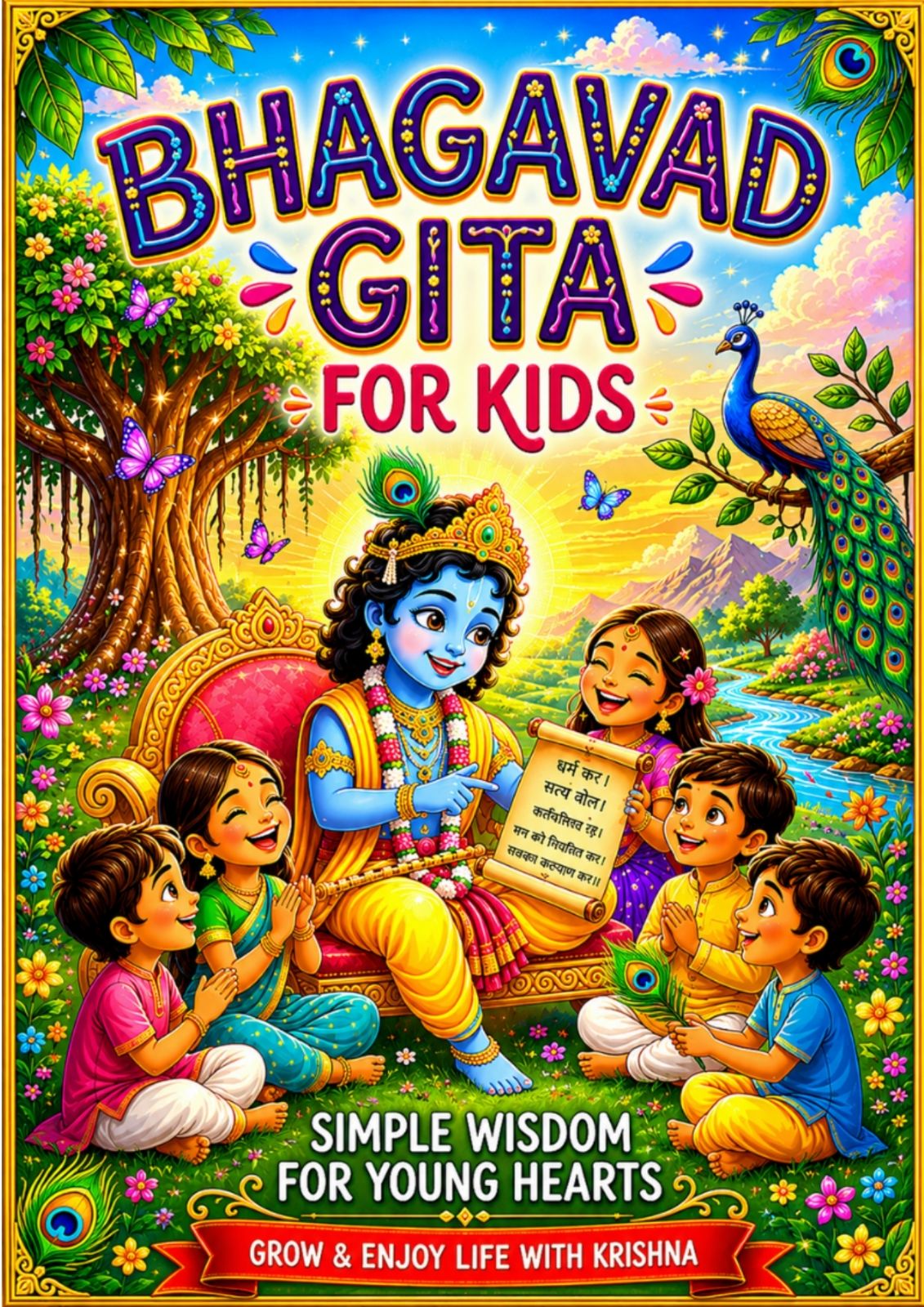
A lot of parents ask us the same question before buying Bhagavad Gita for Kids: "What's actually inside it?" Is it a storybook? A workbook? Something religious? Something they'll have to sit and explain to their child?
Fair questions. So instead of another sales pitch, here's an honest walk-through of what's actually on the pages - the stories, the activities, and the lessons we built the book around.
The Stories: Krishna & Arjuna's Adventures
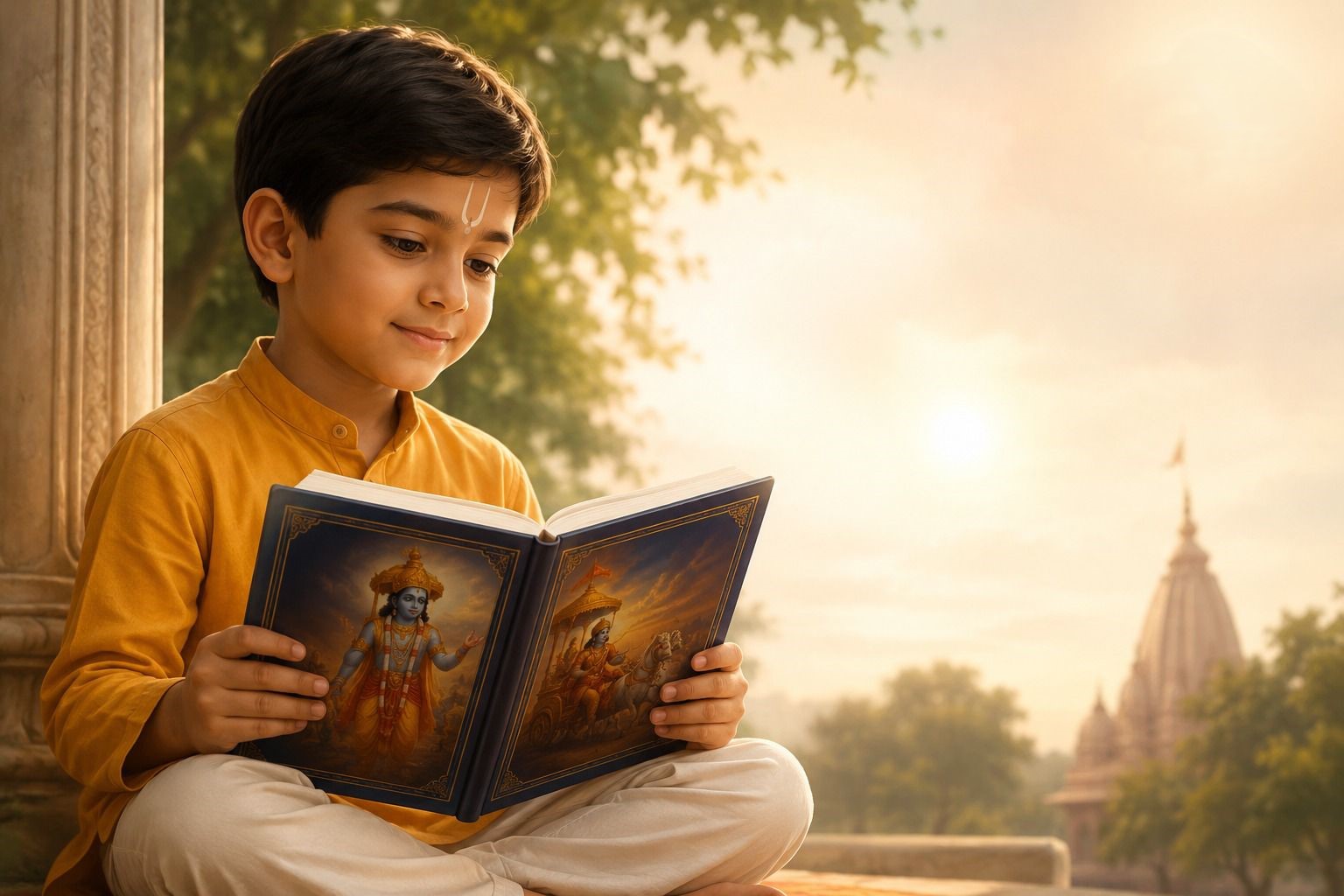
At the heart of the book is the relationship between Krishna and Arjuna - a wise guide and a young warrior facing the biggest, scariest moment of his life. We didn't want to retell this as a dry historical or religious account, so the book frames it the way kids actually engage with stories: as an adventure, with a real character going through real doubt, fear, and growth.
Each story chapter pulls a moment from this larger journey - Arjuna freezing up before a battle, wrestling with fear, learning to trust himself again - and tells it in a way an 8-year-old can follow without a parent needing to pause and explain ancient context. The goal was never to teach scripture. It was to let kids meet two compelling characters and absorb the emotional arc the way they would from any favorite story.
The Activities: Learning by Doing, Not Just Reading
Kids don't retain a lesson because they read it once - they retain it because they do something with it. So every story in the book is paired with an activity designed to make the lesson stick:
- Simple worksheets that get kids to reflect on a feeling the story just covered (fear, jealousy, impatience) in their own words
- Drawing and coloring prompts tied to the scene they just read
- Short reflection questions a parent or teacher can ask out loud, turning reading time into a real conversation
- Small "try this today" challenges - tiny actions a child can practice immediately, not just remember for later
This is the part of the book that turns it from a one-time read into something a child returns to. The activities are deliberately short - built for a child's attention span, not a textbook's.
The Lessons: What Kids Actually Walk Away With
Strip away the story and the activities, and what's left are a handful of values we wanted every child to absorb by the last page:
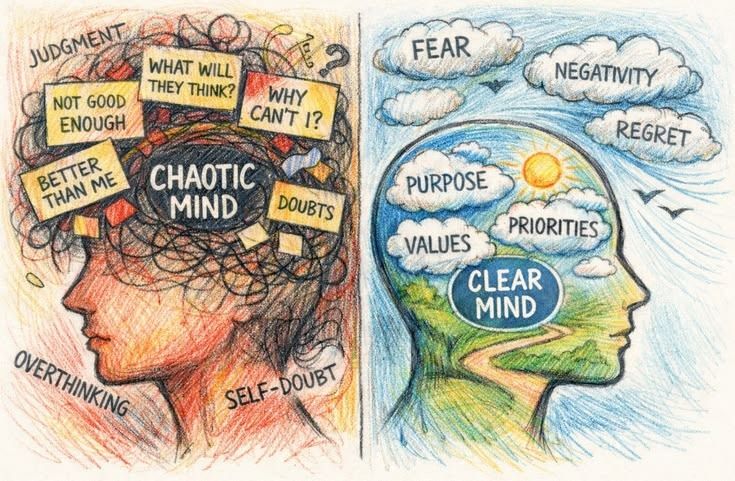
- Positive thinking - noticing the difference between a thought and a fact, and choosing which one to believe
- Emotional strength - having a name and a response for big feelings instead of being overwhelmed by them
- Discipline and focus - small, repeatable habits instead of relying on willpower in the moment
- Confidence and decision-making - trusting their own judgment, even when a choice is hard
- Strong moral values - honesty, fairness, and courage, shown through Arjuna's choices rather than told as rules
None of this is delivered as a lecture. It comes through watching a character work through the exact same struggles a child faces - which is, frankly, why stories have always taught better than instructions.
The Illustrations and Language: Built for Young Readers, Not Adults
A book about an ancient epic could easily end up feeling heavy or old-fashioned. We went the opposite direction. The illustrations are bright, colorful, and full of movement - closer to the visual energy of a comic than a religious text. The language matches: short sentences, everyday words, and zero "boring lecture" tone. A child should be able to read this on their own by around age 8, and a parent should be able to read it aloud to a much younger one without constantly stopping to translate or simplify.
Available in Hindi and English
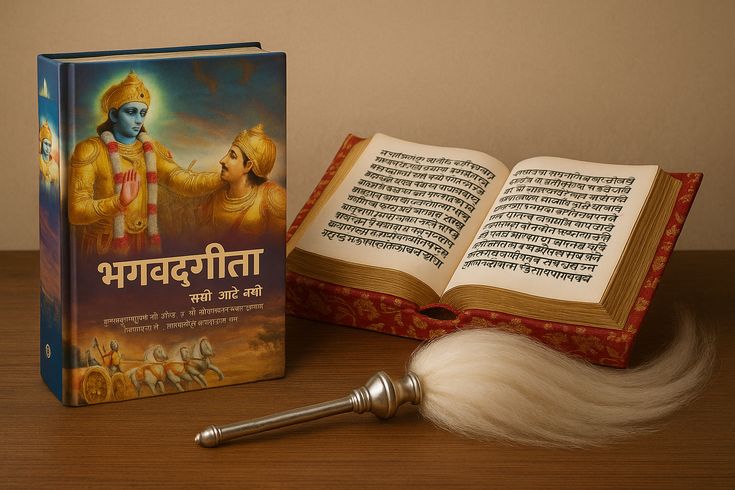
The book exists in both languages, written independently rather than as a direct translation of one into the other - so the storytelling feels natural in either. Families can pick whichever language fits their home, or get both editions together if they want their child moving comfortably between the two. For a deeper look, check out our guide on Bhagavad Gita for Kids.
Who It's Actually For
We built this for children roughly aged 4 to 14, though the experience looks different across that range. Younger kids will enjoy the stories and pictures with a parent reading aloud and guiding the activities. Older kids can read independently and start applying the reflection prompts on their own - which is often where the book does the most quiet work, in the background of everyday school stress, friendships, and the small daily decisions that shape who a child becomes.
More Than a Storybook: A Stress Management Resource for Students
While we built this book primarily as a story collection, parents and teachers kept telling us the same thing back: the activities were quietly working as stress management techniques for students, especially around exam time. That wasn't an accident.
Arjuna's arc - fear, doubt, and finding steadiness before a high-pressure moment - maps almost exactly onto what a student feels before a test. So the reflection prompts and "try this today" challenges double as practical exam stress management tips for students: Naming a fear before it takes over, separating effort from outcome, and building small daily habits instead of relying on last-minute panic.
A few ways families and educators have used the book as part of a broader approach to coping with exam stress:
- As a bedtime or weekend read during exam season, to keep stress reduction techniques for students part of a daily routine rather than a one-time fix
- As a classroom resource teachers use to open conversations with students dealing with stress, using Arjuna's story as a starting point rather than a lecture
- Alongside school counseling, as one of several exam stress resources that gives kids language for what they're feeling
- As a simple, repeatable stress relief strategy for students who don't respond well to more clinical or adult-framed advice
It isn't a replacement for a structured stress management program for students, but it's a genuinely useful entry point - especially for kids who are too young, or too overwhelmed, for a more formal approach.
Beyond the Book: Our School Programs
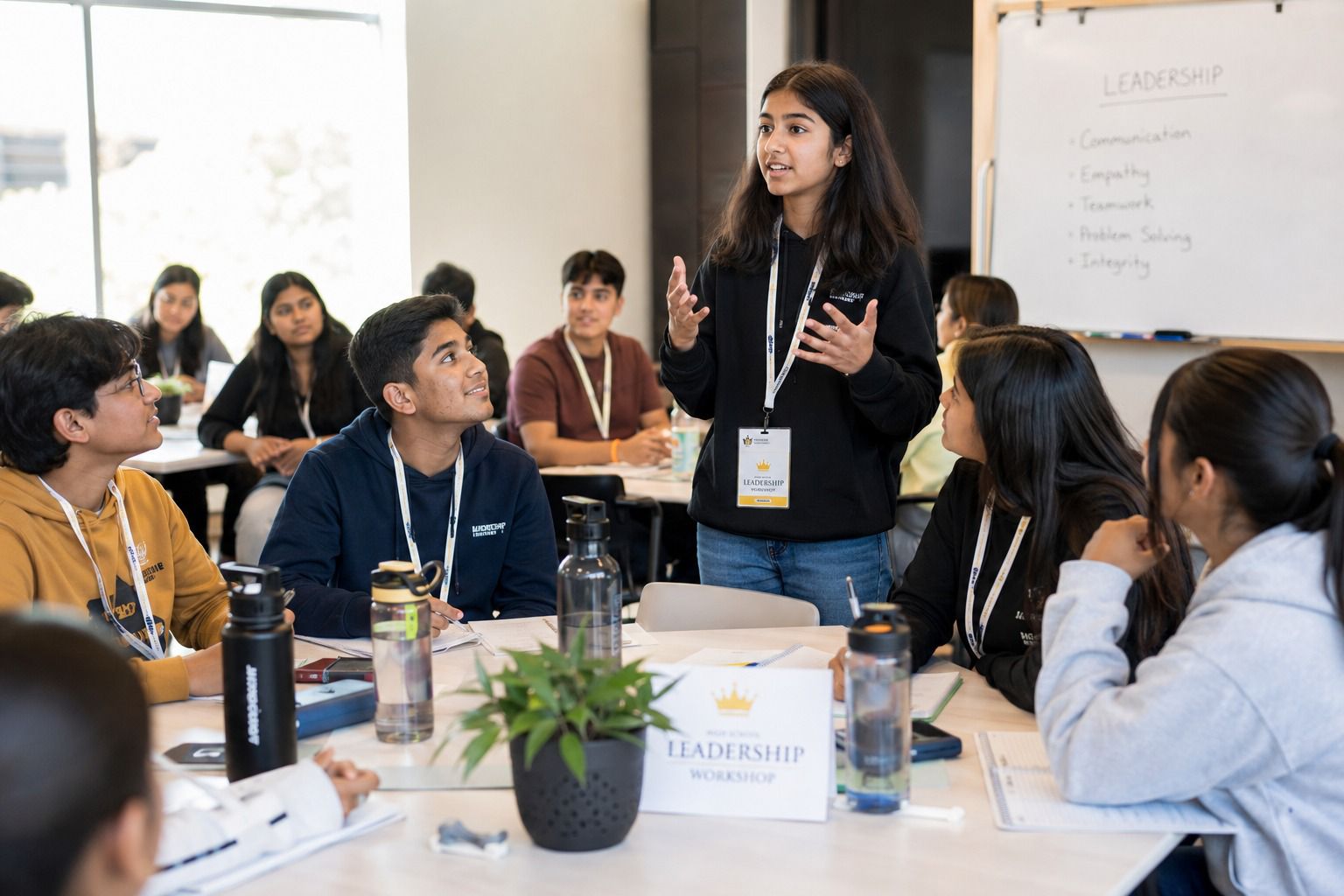
This is also why Soul and Mind runs in-person sessions for schools, built on the same ideas as the book but adapted for a classroom or auditorium setting:
- Student wellness programs that bring these lessons into regular school life, not just exam week
- Motivational speaker for schools sessions designed specifically to help students reframe exam pressure
- Value education programs that build character and emotional strength alongside academics
- Youth empowerment workshops focused on confidence and handling setbacks
- Life skills programs for students covering discipline, focus, and decision-making as ongoing skills, not one-off tips
If your school is looking to reduce stress during exams across an entire batch rather than one child at a time, this is usually the better starting point - the book works well as the at-home companion to it.
A Book That's Meant to Be Used, Not Just Read Once
If there's one thing we'd want a parent to know before opening this book for the first time, it's that it isn't meant to be finished in one sitting and shelved. The activities are there so it gets picked back up - after a tough day at school, before a big test, or just on a quiet weekend afternoon when a story and a coloring page sound more appealing than a screen.
You can explore both editions - English and Hindi, along with the activity-based combo packs - at bhagvadgitaforkids.in. Schools interested in a workshop or ongoing wellness program can contact us directly or learn more on our About Us page.








0 Comments